Stress-Free Alone Time for Puppies and Dogs
A short, calm guide for remote workers: the gentle steps that help your puppy settle on their own — so your next call isn't interrupted by barking, whining, or scratching at the door.
- Why your puppy panics the moment you sit down to work — and what actually calms them
- A 3-minute pre-meeting routine that settles most dogs before the call starts
- The gentle alone-time ladder: how to build calm minutes without distress
- What to do the second the barking starts (without shouting or crating in a panic)


The barking doesn't start when you leave. It starts when you sit down.
You close the laptop lid and the whining begins. You pick up your keys and the pacing starts. By the time the meeting link is open, you're muting yourself mid-sentence and apologising to people you barely know.
A puppy that barks through a 12-minute call isn't being difficult. They're treating your absence like a sudden change in the rules. The fix isn't longer walks, more guilt, or waiting until they're "mature enough" — it's making short absences feel ordinary before your calendar forces longer ones.
Five short chapters. One change each.
Calm Puppy Alone Time For Calls is the Quiet Call Routine in its shortest useful form — about 15 minutes to read, and you can start the first rep today.
Hold 5 Quiet Minutes Before You Add Distance
Calm starts at 5 quiet minutes, not at 30 brave ones.
The baseline isn't a long absence. It's a puppy who can stay home 5 to 10 quiet minutes without turning it into a rehearsal for panic. You get the exact minute-by-minute window to practice.
End The Last Two Minutes, Not The Whole Morning
The puppy reacts to the ending, not the explanation.
Keys, shoes, laptop, door — your puppy learned the pattern long before the door opened. Inside: the do/don't departure sequence that stops the buildup becoming a warning siren.
Practice Alone Time Before The Bark Starts
Calm is easier to keep than to recover.
Under threshold vs. over threshold, side by side — plus the Rule of 3 Reps so you always know when to add a minute and when to cut one in half.
Match Call Length To Current Tolerance
A call that outruns tolerance teaches noise, not calm.
If calm holds for 8 minutes, you leave on minute 7. A simple length rule that keeps your calendar from undoing your training.
Keep The Routine Steady After A Rough Return
One noisy return is data, not a verdict.
What to do after the bad morning: the 30–60 second return, the 10–15 second greeting, and the one-variable-at-a-time rule that stops you from restarting from zero.
Free PDF · Straight to your inbox · Unsubscribe anytime
Quiet minutes at home
This is the first rep — the one that makes every later call easier. Nothing fancy, nothing to buy.
- 0:00SettleUsual spot, water nearby, no extra talk
- 1:00Leave the roomClose one door, wait 60–120 seconds before checking in
- 3:00Stay boringNo pacing, no repeated peeks, no return for every whine
- 5:00First testStill quiet? Keep the exit simple and repeat once more
- 10:00End cleanlyCome back before the barking starts — act like this was normal
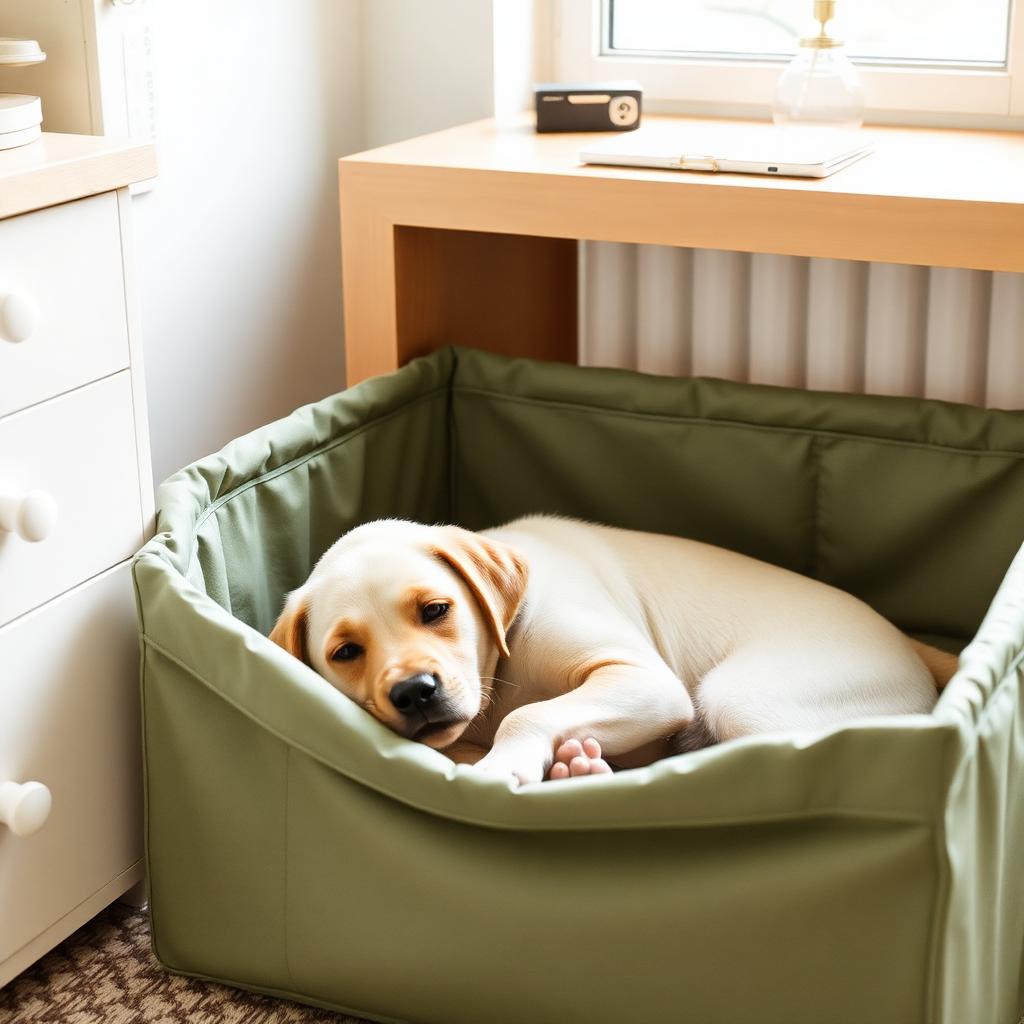
Written for people who work from home with a dog in the room
You're on calls all day
Back-to-back meetings, camera on, and a puppy who starts up the second you say "can everyone hear me?"
You've tried the obvious things
Longer walks, more toys, a louder "no." It works once, then stops working entirely.
You want calm, not a bootcamp
No clicker science, no hour-long sessions. Short, gentle reps you can do between meetings.

The pacing goes quiet before the barking does
- Short absences stop feeling like an emergency
- Departures get dull — and dull is the goal
- Call length follows your dog's tolerance, not your invite
- One rough return stops erasing a week of progress
Before you sign up
Yes. Enter your email and the guide comes straight to your inbox — no card, no trial, no catch.
Want the full system instead?
The free guide is the calm first step. The Quiet Call Code is the complete 7-day routine — built for people who take calls all day.